
Introduction
Health insurance protects individuals and families from unexpected medical expenses. Portability and migration allow policyholders to change their health insurance plans according to their needs while retaining eligible continuity benefits.
Health Insurance Portability
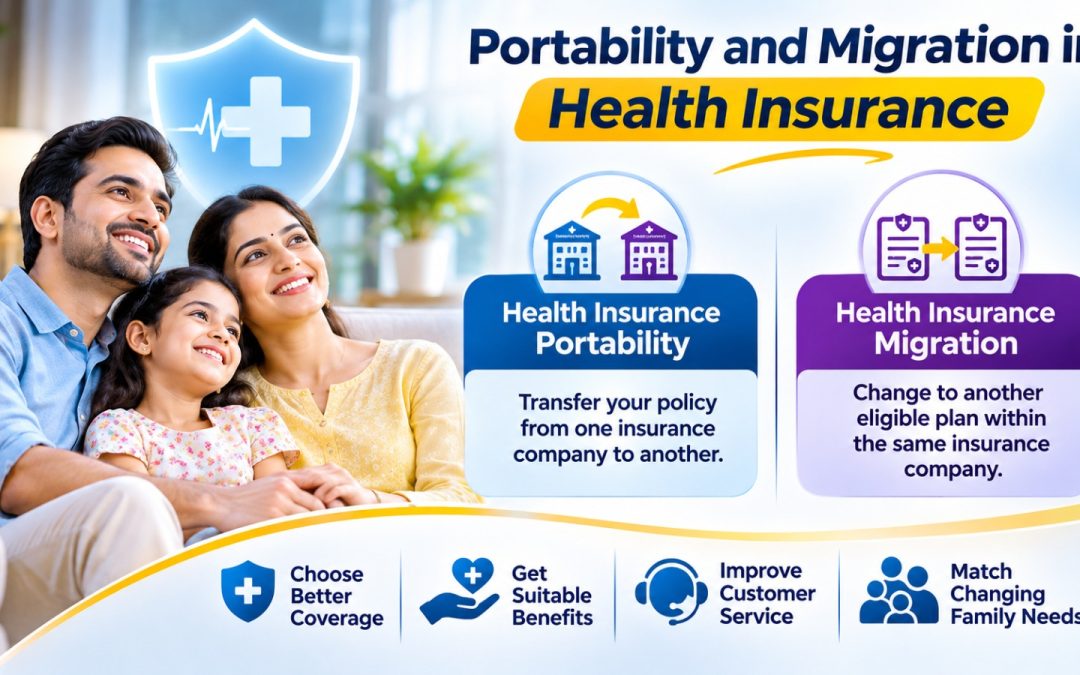
Portability allows a policyholder to transfer their health insurance policy from one insurance company to another. It is useful when customers seek better coverage, improved services, or more suitable benefits. Eligible waiting-period credits may be carried forward, subject to applicable rules.
Health Insurance Migration
Migration means changing from an existing health insurance policy to another eligible plan offered by the same insurance company. It helps policyholders choose coverage that better suits their healthcare needs while retaining eligible continuity benefits.
Key Differences
The main difference is that portability involves changing the insurance company, whereas migration involves changing the policy within the same company.
When Should You Consider Them?
Policyholders may consider portability or migration when they need higher coverage, better benefits, improved customer service, or a plan that suits their changing family and healthcare requirements.
Important Points to Remember
Compare premiums, coverage, exclusions, and waiting periods before deciding.
Apply within the applicable timelines, generally around policy renewal.
Disclose medical history accurately.
Confirm acceptance before discontinuing the existing policy.
Additional coverage may be subject to fresh waiting periods and underwriting.
Conclusion
Portability and migration provide flexibility to choose suitable health insurance. Understanding their differences helps policyholders make informed decisions, retain eligible continuity benefits, and maintain appropriate financial protection against medical expenses.