
Introduction
Motor insurance protects vehicle owners against financial losses arising from accidents and other unforeseen events. In India, third-party motor insurance is legally mandatory for vehicles used on public roads, while comprehensive insurance offers broader protection.
What Is Third-Party Motor Insurance?
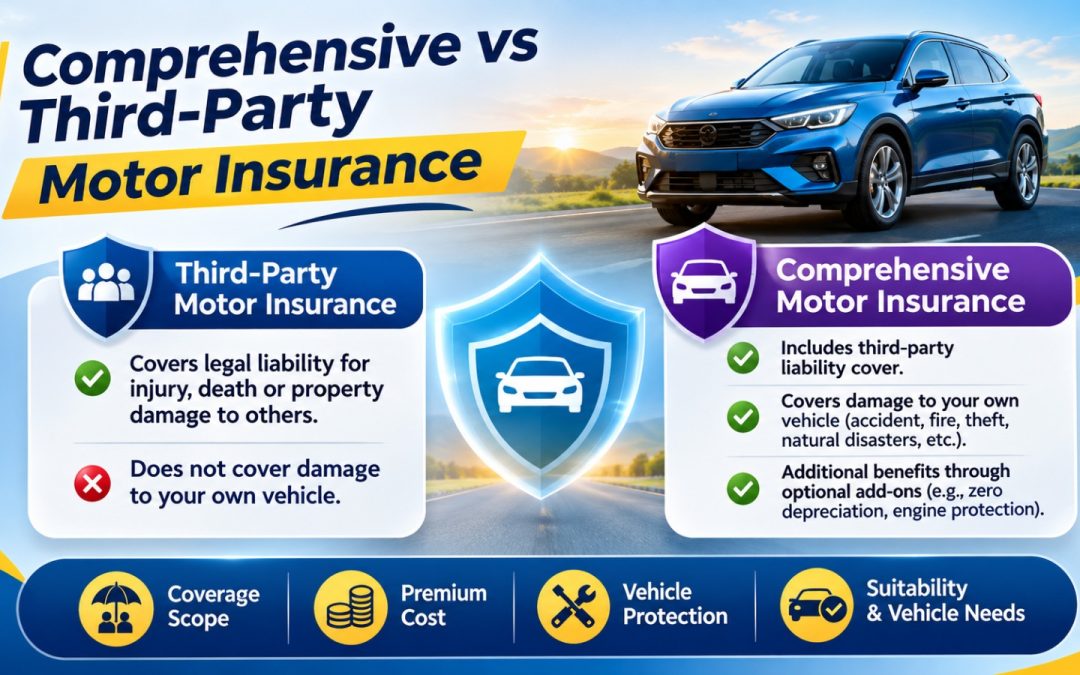
Third-party insurance covers legal liability for injury, death, or property damage caused to another person by the insured vehicle, subject to policy terms and applicable law. It does not cover damage to the policyholder’s own vehicle.
What Is Comprehensive Motor Insurance?
Comprehensive insurance generally combines third-party liability cover with own-damage protection. Depending on the policy, it may cover damage to the insured vehicle caused by accidents, fire, theft, natural disasters, and other specified events. Additional benefits may be available through optional add-on covers.
Key Differences
Coverage: Third-party insurance covers liabilities to others, while comprehensive insurance also covers eligible damage to your own vehicle.
Premium: Third-party premiums are generally lower; comprehensive premiums are usually higher because of the wider coverage.
Vehicle protection: Third-party insurance does not cover repairs to your own vehicle, whereas comprehensive insurance can cover eligible repair or replacement costs.
Suitability: Third-party insurance meets the basic legal requirement, while comprehensive insurance is useful for owners seeking broader financial protection.
Third-party insurance may suit owners seeking basic mandatory coverage, particularly when considering the value and age of their vehicle. Comprehensive insurance may be preferable for new, expensive, or frequently used vehicles where unexpected repair or theft costs could be significant.
Important Points to Remember
Before purchasing a policy, compare coverage, exclusions, deductibles, Insured Declared Value (IDV), and claim conditions. Optional covers, such as zero depreciation and engine protection, may provide additional benefits at an extra cost.
Conclusion
Both types of motor insurance serve important purposes. Third-party insurance provides essential liability protection, while comprehensive insurance offers broader coverage for the insured vehicle. Choosing the right policy depends on your budget, vehicle value, usage, and protection needs.